
If you brought us an animal and wish to get an update, please click here!
Experiencing an animal emergency? Call Red Creek at (570) 739-4393 and click the image for more information —>
Summer Internship Applications are Closed
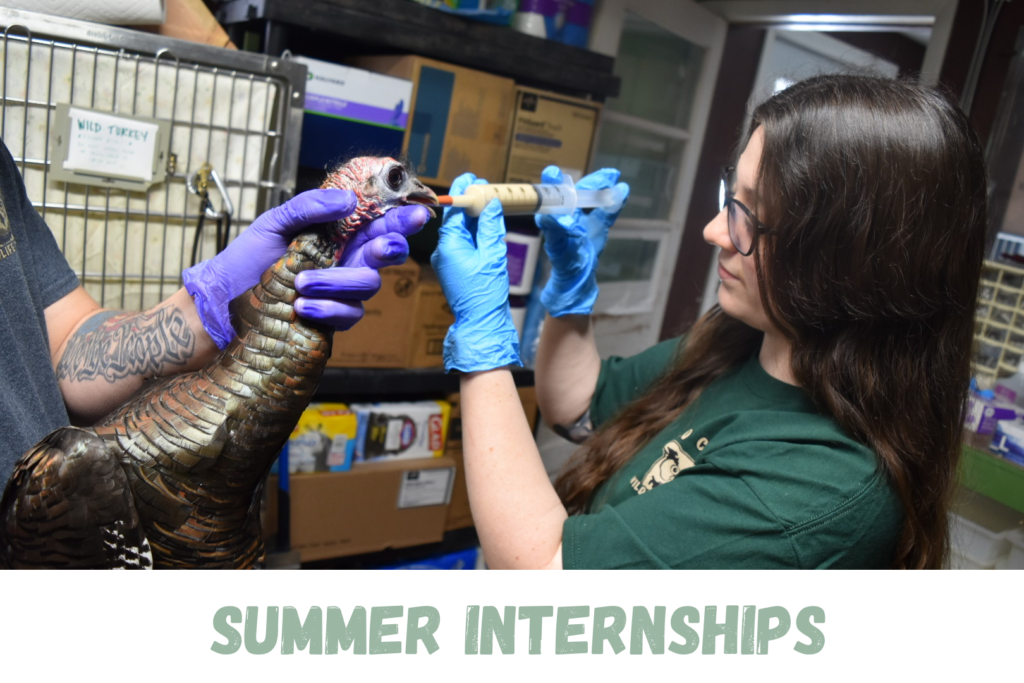
Red Creek offers several internship opportunities each year. Level One Summer Internships, Spring Internships, and Fall Internships are unpaid, part-time positions. Level 2 Summer Internships are full-time, minimum wage opportunities.
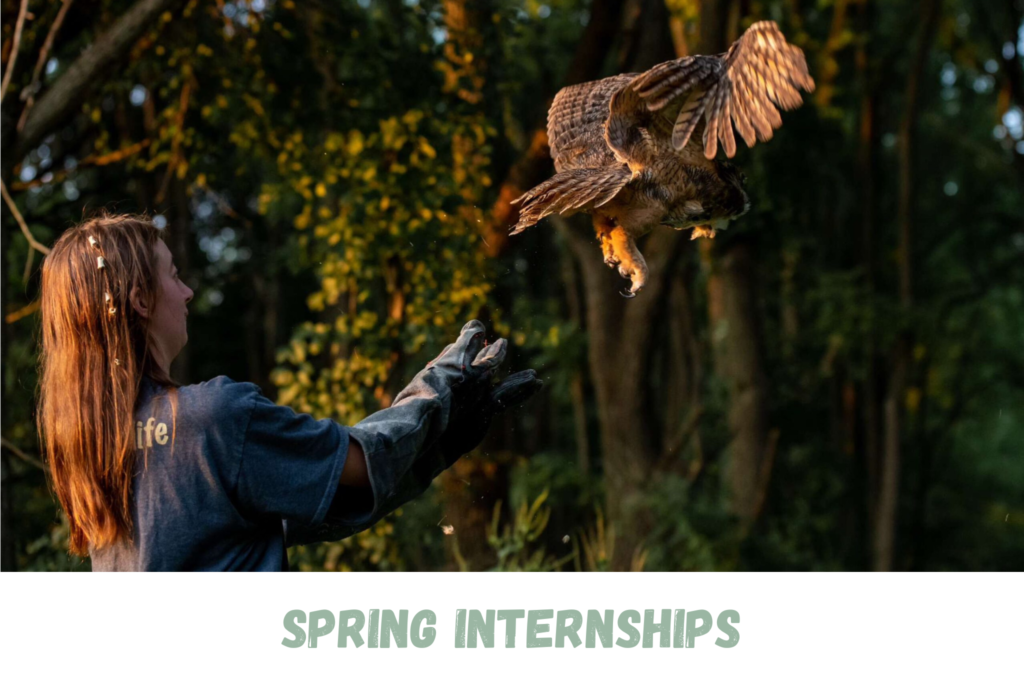
Click each photo to learn more about our internship opportunities!
FALL 2026 Internship applications are open now!
Our Mission, Our Philosophy
To offer a second chance to distressed Pennsylvania wildlife through rescue and rehabilitation, public education, and by providing training for wildlife rehabilitators.
Taking in over 4,000 animals annually, from the tiniest hummingbird to the largest eagle, from chipmunks to deer, Red Creek has been giving wildlife a second chance since 1991.
Because Everything Deserves a Second Chance
We believe that education is an important part of saving our wildlife, the environment and the planet for future generations.
Each year, tens of thousands of students enjoy a positive wildlife experience through Red Creek’s LIVE RAPTOR programs and assemblies.
We believe wildlife rehabilitation is a valuable service that should be available to everyone.
Red Creek is helping others become wildlife rehabilitators through classes, seminars and online training, expanding this serve to new areas in Pennsylvania and nationally.
We believe your charitable investment should be life-changing for both animals and people.
Protecting Our Families and Community Since 1991
It’s obvious that wildlife rehabilitation helps animals, but did you know it protects people as well?
By providing a safe and humane service that helps a wild animal foundling in need, a family’s exposure to that animal is greatly reduced.
Through our services, our loved ones, especially our children and pets are protected from dangerous, possibly FATAL INJURY, DISEASE, AND PARASITES.
Red Creek Wildlife Center relies solely on YOUR generous contributions to meet the ever-growing need for our services.